Nylon vs polyester vs polypropylene webbing
| Nylon | Polyester | Polypropylene | Cotton | |
|---|---|---|---|---|
| Strength | Highest | High | Medium | Lower |
| Stretch | Some | Low | Low | Low |
| Water | Absorbs some | Resists | Repels, floats | Absorbs |
| UV | Fair | Good | Lower | Fair |
| Typical use | Outdoor gear, pet leads | Bag straps, belts | Budget bags, handles | Fashion straps, aprons |
Flat vs tubular webbing
Flat webbing is woven as a single layer and is the standard for straps and belts. Tubular webbing is woven as a tube and flattened, giving soft edges and a thicker feel — used for handles, leashes and climbing-style products.
What should I specify when ordering webbing?
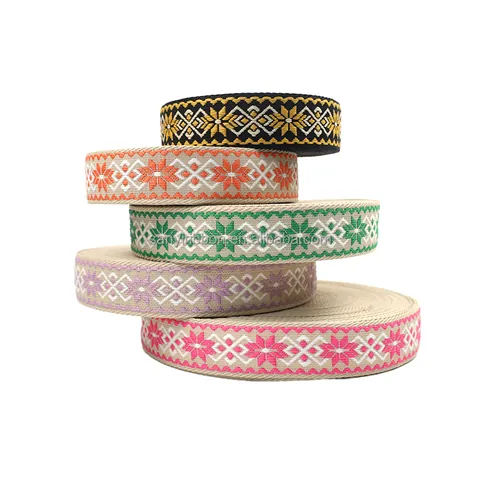
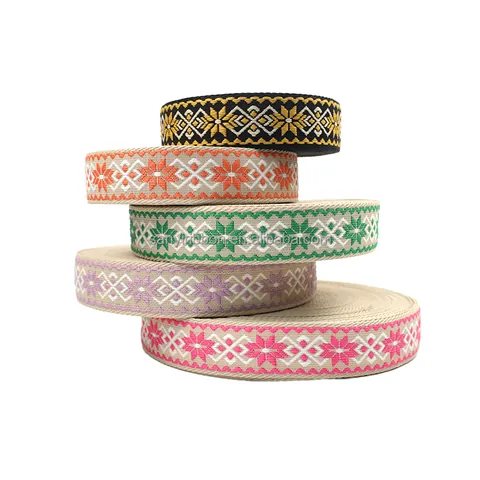
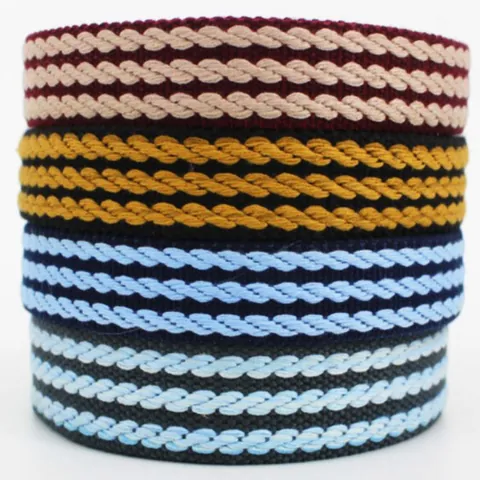
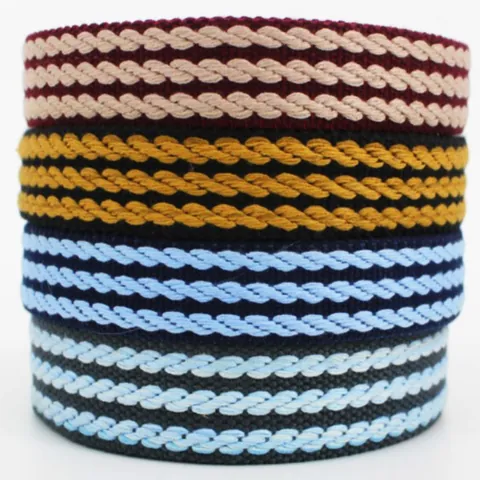
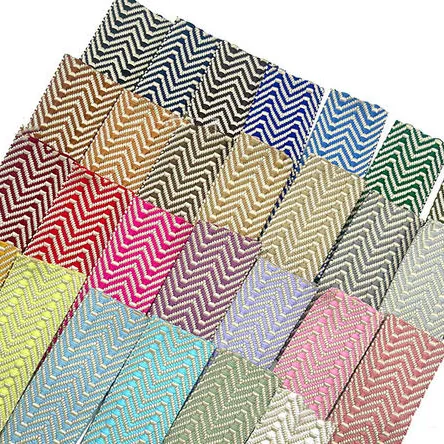
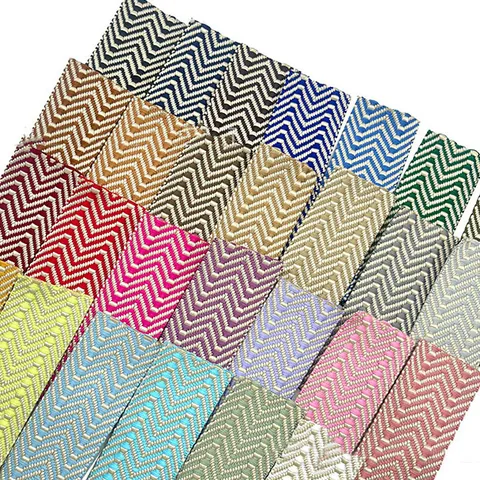
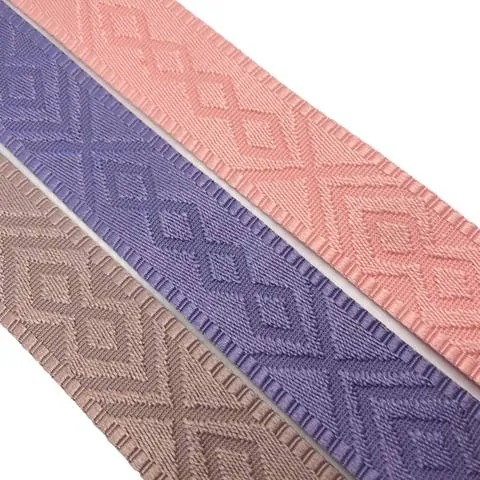
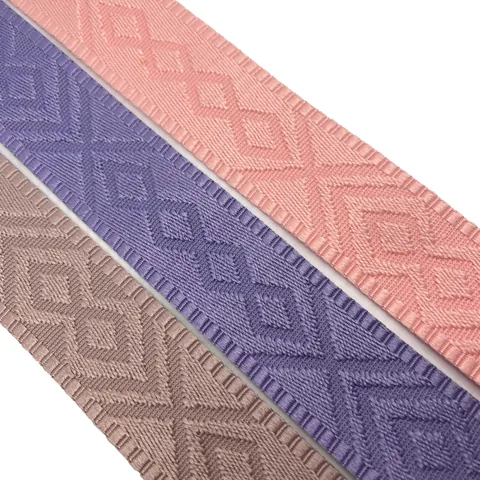
- Material and weave (plain, twill, herringbone, jacquard)
- Width and thickness
- Colour number, or jacquard / printed logo
- Roll length and quantity
See our webbing and ribbon range and matching buckles.
Quick answers
Which webbing is best for bag straps?
Polyester is the usual choice: strong, low stretch and colourfast. Nylon suits outdoor gear that needs maximum strength.
What width webbing do backpacks use?
25 mm and 38 mm are the most common for backpack straps; 20 mm for smaller adjusters.
Last reviewed 2026-11-16 · Related ranges: Webbing & Ribbon · Straps & Lanyards