What are the main types of lace?
| Lace | How to recognise it | Typical use |
|---|---|---|
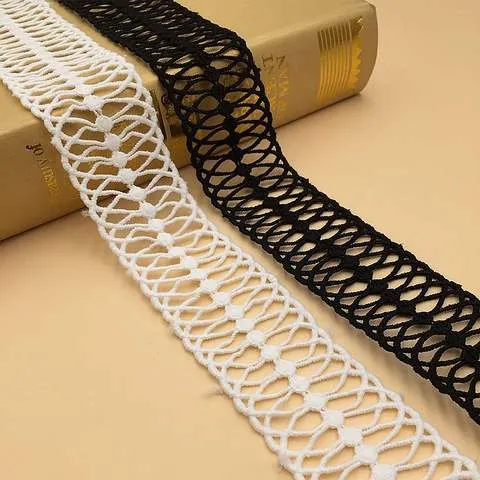
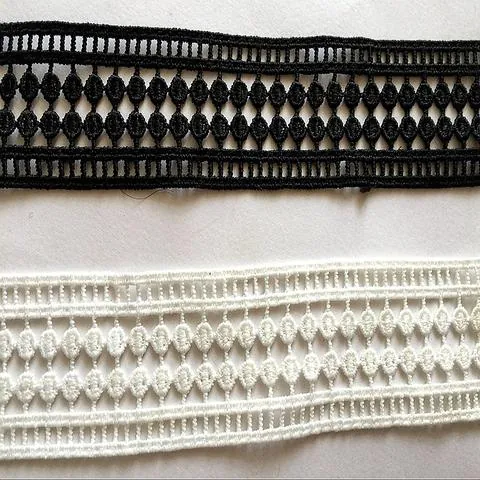
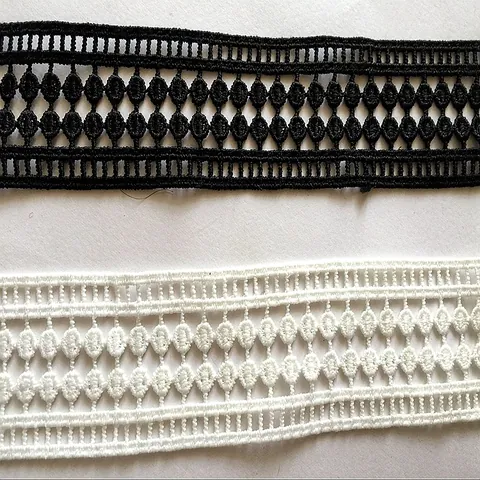
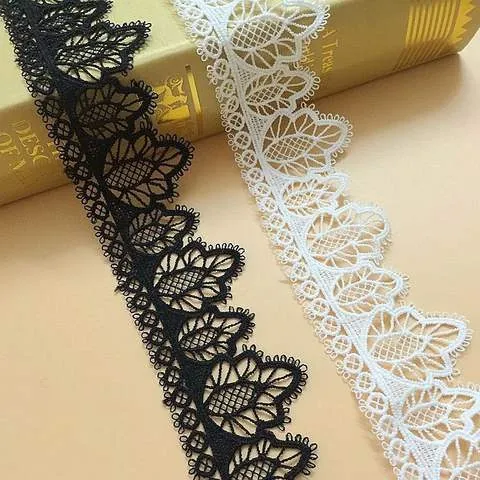
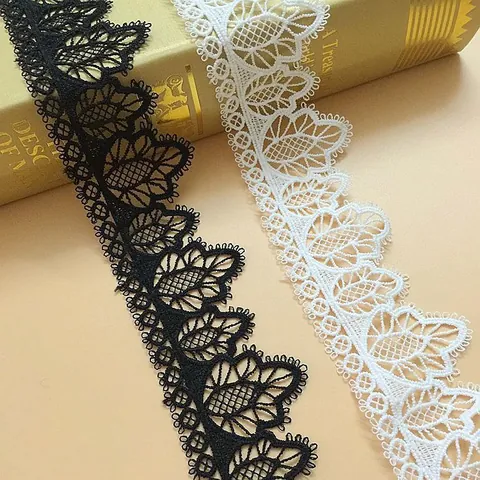
| Guipure | Heavy motifs joined by bars, no net ground | Dress panels, collars, cuffs |
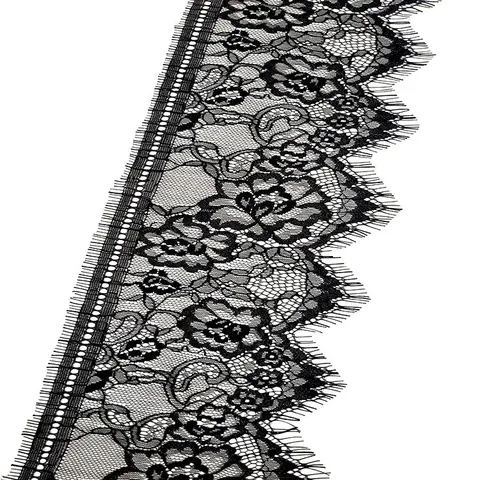
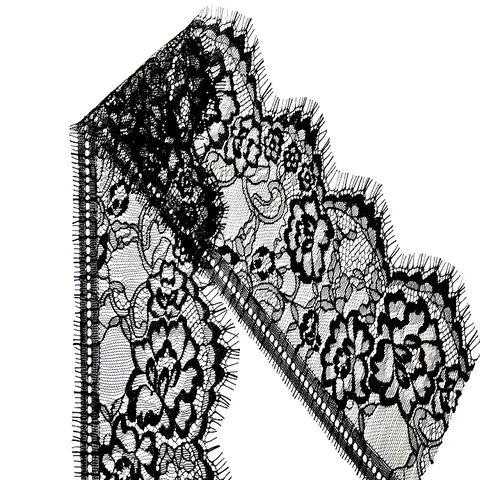
| Eyelash | Fine threads left long along the edges | Lingerie, necklines, hems |
| Chantilly | Fine net with outlined floral motifs | Bridal, lingerie |
| Raschel | Warp-knitted lace on a net, cost-effective | Lingerie, fashion trims |
| Stretch lace | Contains spandex, stretches and recovers | Lingerie edges, waistbands |
| Embroidered cotton | Embroidery on cotton, sometimes with eyelets | Children's wear, blouses, home textiles |
What is guipure lace?
Guipure is a heavy, three-dimensional lace whose motifs connect directly to one another or through small bars, with no net behind them. It is often made by embroidering onto a base that is later dissolved, which is why it is also called chemical lace. It holds its shape well, so it is used for collars, appliqués and whole dress panels.
What is eyelash lace?
Eyelash lace is a light lace whose edges finish in long, loose threads that look like eyelashes. It softens necklines, cups and hems on lingerie and dresses, and is usually sold by the metre in trims or wider panels.
Browse our lace and embroidery range — the largest category on this site.
Quick answers
Which lace is best for lingerie?
Stretch lace and eyelash lace for edges, chantilly or raschel for cups and panels — choose stretch lace wherever the edge must move with the body.
Can lace be dyed to match my fabric?
Polyester and nylon laces dye well; cotton lace dyes differently from synthetics, so match on the actual lace sample.
Last reviewed 2026-11-16 · Related ranges: Lace & Embroidery